UK Parliament Hosts Baqi Commemoration, Renewing Calls for Access and Preservation

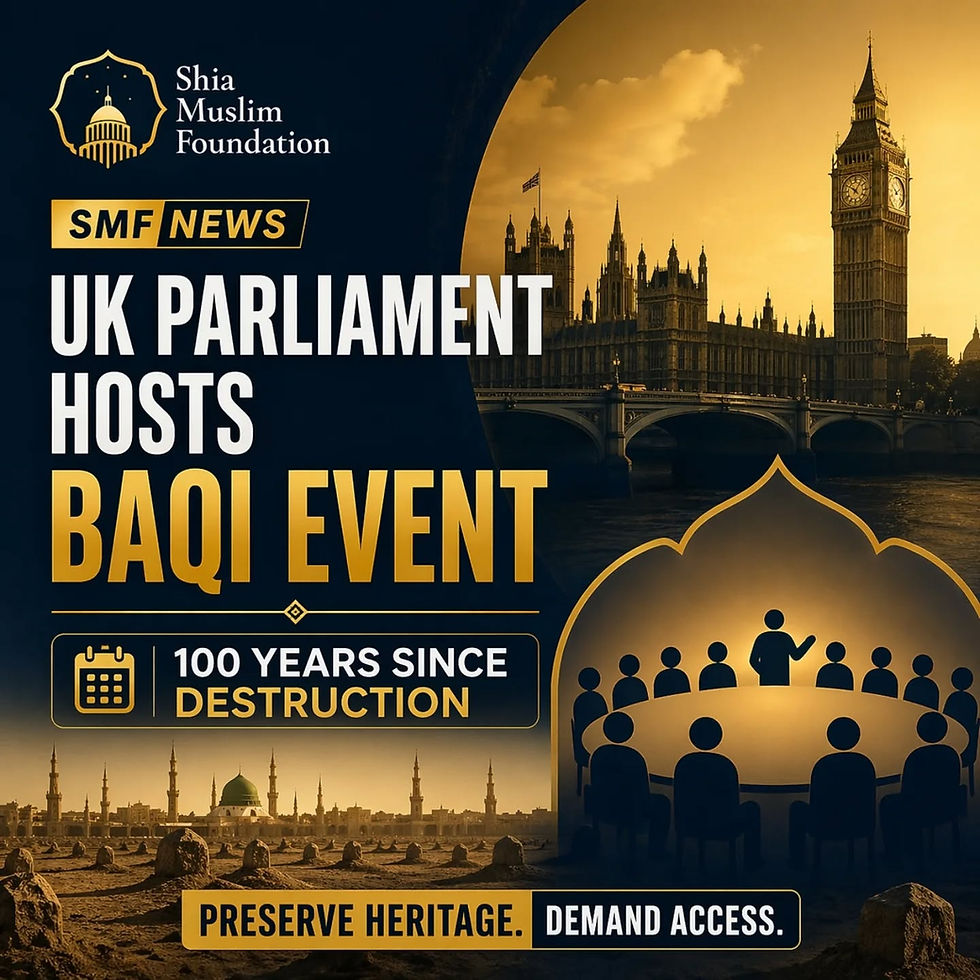
A high-level event at the House of Lords this week marked the 100-year anniversary of the destruction of the Baqi Cemetery, bringing the issue into a formal political setting and signaling a shift toward coordinated advocacy in the United Kingdom. The program, organized by the Al Baqee Organization in partnership with the Al Khoei Foundation, drew faith leaders, policymakers, and community representatives for a focused discussion on access, preservation, and accountability.
The event comes amid renewed global attention on religious heritage sites and their protection, with organizers positioning Baqi as part of a broader conversation on cultural and religious rights. Hosting the discussion inside Parliament moved the issue into a policy environment where engagement with decision-makers can take place directly.
Mohammed Al-Hilli addressed the audience and framed the issue in direct terms. Sheikh Mohammed Al-Hilli stated that “the need for women to be allowed entry into Baqi cannot be ignored” and emphasized that “the opportunity today to apply political pressure and lobby cannot be taken lightly.” His remarks tied the destruction of the cemetery to present-day restrictions, describing the issue as ongoing and unresolved.
The Al Baqee Organization has taken a structured approach focused on policy engagement alongside awareness efforts. Its work includes organizing international events, building interfaith partnerships, and engaging lawmakers. This event reflects that strategy and signals a move toward sustained advocacy within formal political channels.
The Baqi Cemetery in Medina, referred to by the same name as the organization, holds deep significance in Islamic history. It is the burial site of members of the family of the Prophet Muhammad and many early companions. In 1925, the cemetery was demolished during the formation of the Saudi state. Structures marking graves were removed, leaving the site largely unmarked. Efforts to rebuild or preserve the cemetery have not progressed, and access restrictions, including limitations affecting women, remain a point of concern.
Recent coverage and community reporting around the anniversary point to growing international coordination on the issue, particularly in Western countries where advocacy can intersect with political systems. The House of Lords event reflects that shift. It places Baqi within a broader discussion of religious rights and heritage preservation while signaling a continued push for political engagement.


Comments